
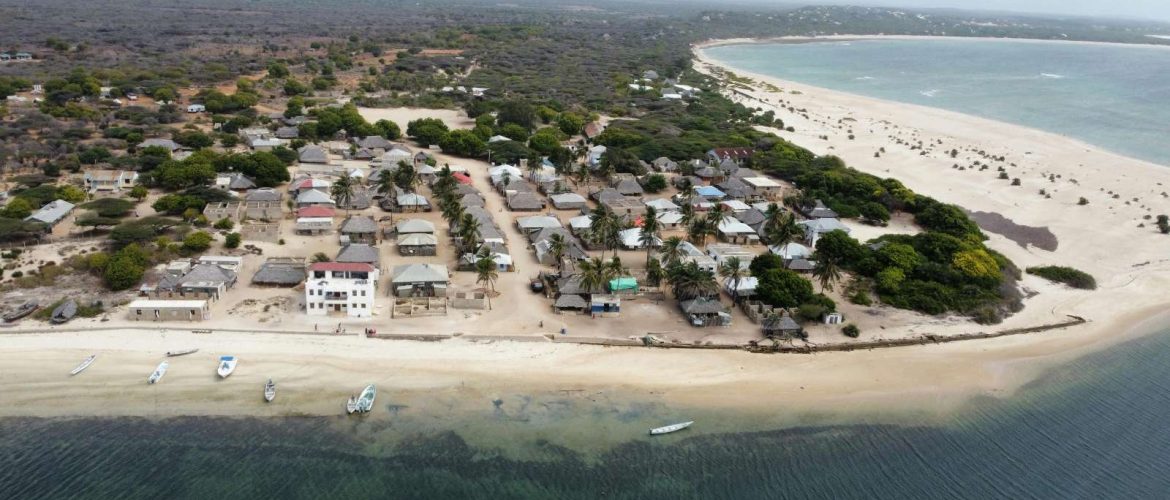
Lamu smells like frankincense, salt water, and faintly of donkey, which sounds less appealing written down than it actually is. You step off the small plane at Manda Island airport and within minutes of taking the ferry across to Lamu Town, you are in a place that operates entirely on its own logic.
There are no cars in Lamu Town. The streets are too narrow for them. Instead, the town moves by foot and by donkey. Lamu Town was listed as a UNESCO World Heritage Site in 2001 – established in the fourteenth century as a Swahili trading port, large sections of it have changed so little over six centuries that it feels genuinely archaeological.
The architecture is extraordinary – tall, narrow coral-stone buildings with intricately carved wooden doors that are themselves an art form, small interior courtyards open to the sky, elaborately plastered niches built into walls to hold oil lamps. The oldest mosque in Kenya, the Pwani Mosque, still holds daily prayers. Cats are everywhere, hundreds of them, navigating the narrow lanes with the ownership of creatures who have been resident here considerably longer than the tourists.
I rented a simple room on the third floor of a traditional guesthouse – a rooftop terrace, a ceiling fan, a brass bed, and a view of the harbour where wooden dhows rocked gently against the dock. I paid less per night than I have paid for a parking space in Nairobi. My host Hassan brought tea each morning without being asked.
I took a dhow trip one afternoon – the kind of traditional sailing vessel that has worked these waters for a thousand years. The Swahili coast maritime tradition is one of the oldest continuous seafaring cultures in the Indian Ocean, and sailing on these channels in a hand-built wooden boat, you feel it.
The food in Lamu deserves its own paragraph. Swahili coastal cuisine is layered with spice in a way that is complex rather than just hot. I ate at a small family restaurant every night that served two options: fish and rice, or goat and rice. The culinary heritage of the Swahili Coast draws on centuries of trade with the Arabian Peninsula, the Indian subcontinent, and the African interior – and you taste every layer of it.
Lamu is not for every traveller. It is slow, and some people find slow uncomfortable. The lack of conventional tourist infrastructure – no scheduled activities, no guides with clipboards – means you have to be comfortable making your own day. But for travellers who want something that speaks to another layer of Kenya’s history and culture entirely, Lamu is irreplaceable. Come for three nights minimum. Do not bring a full itinerary. Get lost on purpose.