
I remember sitting upright at 4:47 a.m. in a canvas tent somewhere in the middle of the Mara and thinking, for a brief second, that I had made a terrible mistake. It was pitch black outside. Something was moving – slow, heavy footsteps that shook the ground ever so slightly – maybe thirty metres away from the tent. I could hear it breathing. Not a big, dramatic sound, you understand. Just steady, unhurried breathing that somehow communicated size without a single word. I lay there gripping the edge of my sleeping bag until the camp’s Maasai night guard walked by with a lantern and whispered, “Tembo. Elephant. It is fine.”
It was fine. It was more than fine. That moment – that specific intersection of darkness and wildness and utter disorientation – was probably the moment I fell permanently in love with Kenya.
I had been travelling for about eighteen hours by the time I reached my tented camp outside the Maasai Mara National Reserve. The journey started at Nairobi’s Wilson Airport, where I boarded a tiny twelve-seater prop plane that bumped and wobbled over the Great Rift Valley escarpment before dropping onto a short dirt airstrip carved out of golden grass. A Land Cruiser was waiting, along with my guide Joseph, who had been leading safaris in the Mara for over two decades. He shook my hand, handed me a cold bottle of water, and said, “Welcome. You are going to love it here.” He said it like it was not even a question.
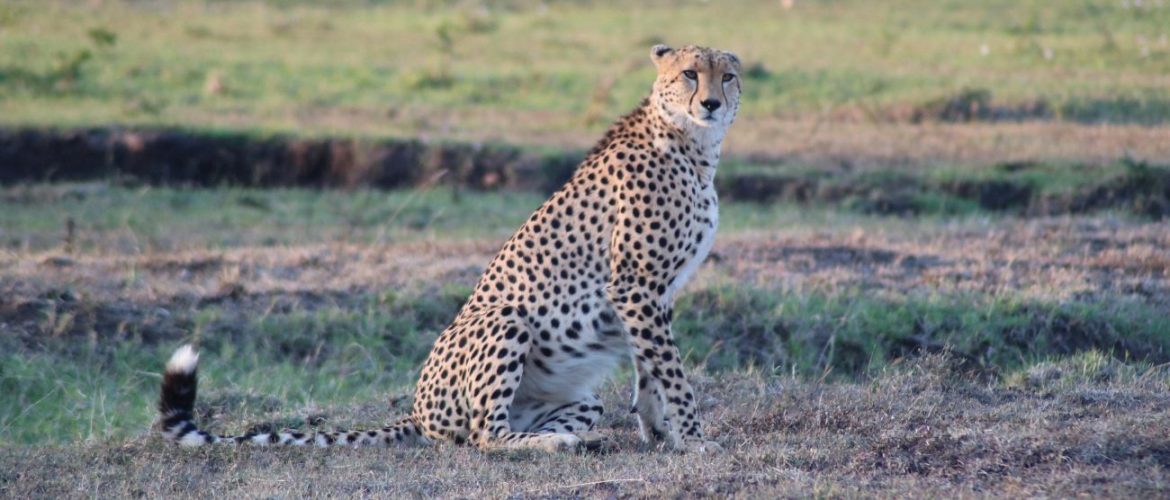
The drive from the airstrip to camp took about forty minutes, and within the first ten we had already stopped three times. First for a family of warthogs trotting in single file, tails raised like little radio antennas. Then for a pair of lilac-breasted rollers sitting on a dead acacia branch, their colours so unreasonably bright they looked photoshopped against the pale blue sky. Then for a cheetah – a cheetah, casually strolling through the long grass parallel to our track like it was late for a meeting and could not be bothered about us at all.
I had been in Kenya for maybe forty-five minutes. The Maasai Mara National Reserve is not what I expected, which is strange because I had researched it obsessively for months. I had read every blog, watched every documentary, scrolled through Instagram galleries until my phone overheated. I thought I knew what to expect. What I did not expect was the scale. The Mara is enormous in a way that photographs simply fail to communicate – a rolling, undulating sea of golden grass that stretches to every horizon, broken only by lines of trees following hidden river courses and the occasional flat-topped acacia.
I arrived in late July, timing the trip around the Great Wildebeest Migration. If you have never heard of this event, it is often described as one of the greatest wildlife spectacles on earth, and for once that description is not an exaggeration. Each year, roughly 1.5 million wildebeest – along with hundreds of thousands of zebra and gazelle – move in a great clockwise circuit between the Serengeti in Tanzania and the Maasai Mara in Kenya, following the rains and the grass.
The crossing of the Mara River, where the animals plunge into crocodile-infested water in a kind of collective panic, is the moment that draws photographers and tourists from all over the world. National Geographic has covered it extensively, and even their best photography does not fully prepare you for being there.
We found a crossing on my second full day. Joseph had been monitoring radio signals from other guides and tracking patterns he had learned over years of watching. He drove us to a bend in the river where the far bank was already thick with wildebeest, thousands of them, shuffling and stamping and working up a collective nerve. We parked and waited.
What followed was about four minutes of something I still do not have adequate words for. The noise alone – hooves on water, the grunting and bellowing, splashing, the deep thrash of crocodiles lunging from beneath the surface – was overwhelming. The smell of thousands of animals in churned muddy water rolled over us in a wave. And through it all, the wildebeest kept coming, shoulder to shoulder, eyes wide, a living river within a river.
I cried. I am not embarrassed about that. Joseph, who has watched thousands of crossings, watched me cry with a small, knowing smile.
Beyond the migration, the Mara is remarkable year-round. On that same trip, we tracked a pride of lions for an entire afternoon as they napped, played, and eventually gathered themselves for an evening hunt. We followed a leopard for three days – each morning Joseph would find fresh tracks and we would spend hours waiting before the cat finally revealed itself, draped magnificently over a branch with an impala kill hanging below.
The African Wildlife Foundation estimates that lion populations across Africa have declined by over 40% in just three generations – which makes sitting thirty metres from a pride in the Mara feel less like tourism and more like a responsibility to witness and remember.
Evenings at camp were their own kind of extraordinary. The dinners were served under the stars at long wooden tables set with linen and candlelight, which sounds ridiculous and over-the-top out here in the middle of nowhere, and somehow is exactly right. If you are planning a first trip to Kenya, start with the Mara. Give it at least four nights. Trust your guide. Wake up early every single morning even when you do not want to. And when the elephant walks past your tent at 4:47 a.m., try not to panic. It is fine. It is more than fine.