
By the time I landed in Mombasa at the end of my second Kenya safari, I was physically and spiritually coated in dust. Not metaphorical dust – actual, red-brown Tsavo dust that had worked its way into my hair, my camera bag, the lining of my jacket, and, somehow, the pages of the novel I was reading. I had been on the road for ten days. What I needed was the ocean.
Diani Beach is about thirty kilometres south of Mombasa. It sits on the southern coast of Kenya along the Indian Ocean, and has been ranked among the best beaches in Africa multiple years running. The moment you reach the beach and see that water – the improbable turquoise-blue-green of shallow tropical ocean over white sand – something in your nervous system simply releases.
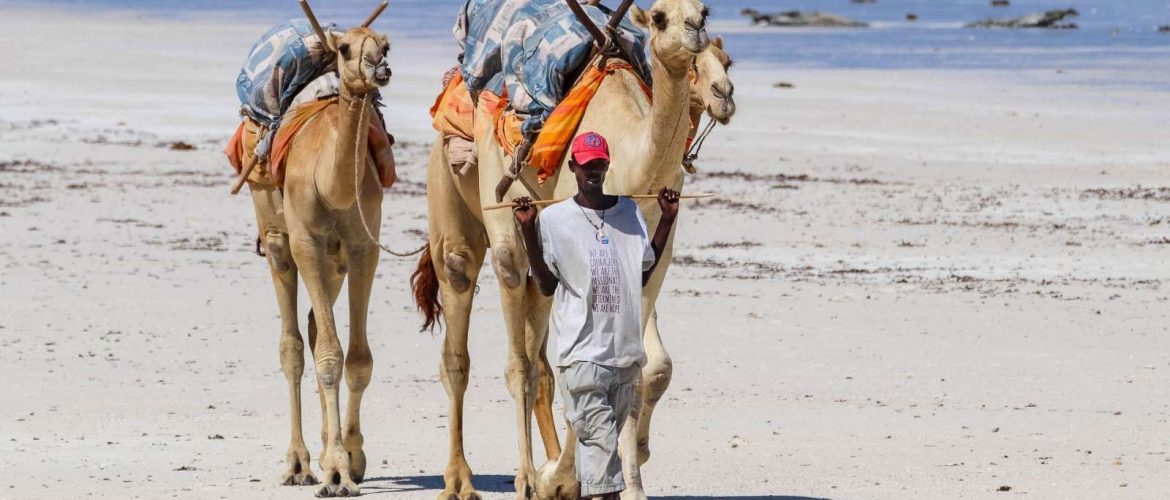
The beach itself runs for roughly seventeen kilometres, backed by casuarina trees and lush coastal vegetation. The sand is the real thing – powdery, white, cool underfoot even on hot afternoons. The water is warm year-round, sheltered from strong currents by an offshore coral reef that makes it safe for swimming. Early mornings are quiet and extraordinary, just a few local fishermen pulling out in traditional dhows while the light comes up soft and pink over the water.
I signed up for a snorkelling trip to Kisite-Mpunguti Marine Park, about an hour south by boat. The marine park protects an area of outstanding reef and is home to spinner dolphins who regularly escort boats. We were thirty minutes out when a pod of maybe twenty dolphins appeared off the bow. The snorkelling on the reef was exceptional: turtles, reef sharks, parrotfish, a moray eel peering out from a crevice with an expression of frank suspicion.
The coastal culture around Diani is Swahili – a blend of African, Arab, and South Asian influences that has produced one of the most distinctive cultures in East Africa. The architecture shows it, all carved wooden doors and whitewashed coral-stone walls. The food shows it even more: samaki wa kupaka (fish in coconut curry), biryani with slow-cooked goat, mahamri with tea.
One morning I hired a bicycle and rode south along the coastal road. I stopped to watch colobus monkeys – a species found only along this narrow coastal strip of East Africa – move through the trees above the road in family groups. One particularly audacious individual removed a bread roll from a breakfast table not three metres from a man still sitting at it. The monkey was gone before the man looked up.
I have talked to a lot of Kenya travellers who skip the coast, or treat it as a separate trip. The contrast itself is part of the experience. The safari strips away the ordinary; the beach then gives you space to let what you have seen actually settle. Three nights is the minimum. Five is better. Take the boat to Kisite. Eat the fish curry.