
There is a photograph taken of me on my third morning in Amboseli that I look at whenever I need reminding why I travel. In it, I am standing beside our Land Cruiser, one hand shielding my eyes from the early sun, looking up at something out of frame. My mouth is open. My guide told me later that I had been standing like that, completely still and completely silent, for almost four minutes before he finally said my name.
What I was looking at was Kilimanjaro.
I know that sounds simple, maybe even obvious. Of course you can see Kilimanjaro from Amboseli – it is one of the most famous views in Africa. But there it was, rising out of the flat Amboseli plain in southern Kenya, so large it did not look real, its glaciered summit catching the early light while the lower slopes were still wrapped in the soft purple shadow of dawn. UNESCO designated Kilimanjaro a World Heritage Site in 1987, and standing beneath it you understand immediately why. It exists at a scale the human brain simply refuses to process correctly at first.
Amboseli National Park sits right on the Tanzanian border, and from almost anywhere in the park you have this extraordinary backdrop of Africa’s highest peak – 5,895 metres of extinct volcano rising above the surrounding savanna. The park covers about 392 square kilometres, which makes it considerably smaller than the Maasai Mara, but what it lacks in size it more than compensates for with intimacy and a very specific kind of beauty.
I arrived in the dry season, which is the best time to visit. The waterholes and swamps at the heart of the park draw animals from all over the ecosystem, concentrating wildlife in ways that make game-viewing remarkably reliable. Within two hours of my first game drive, we had seen lions, giraffes, Cape buffalo in their hundreds, a black-backed jackal with her pups, and more elephants than I had ever seen in one place before.
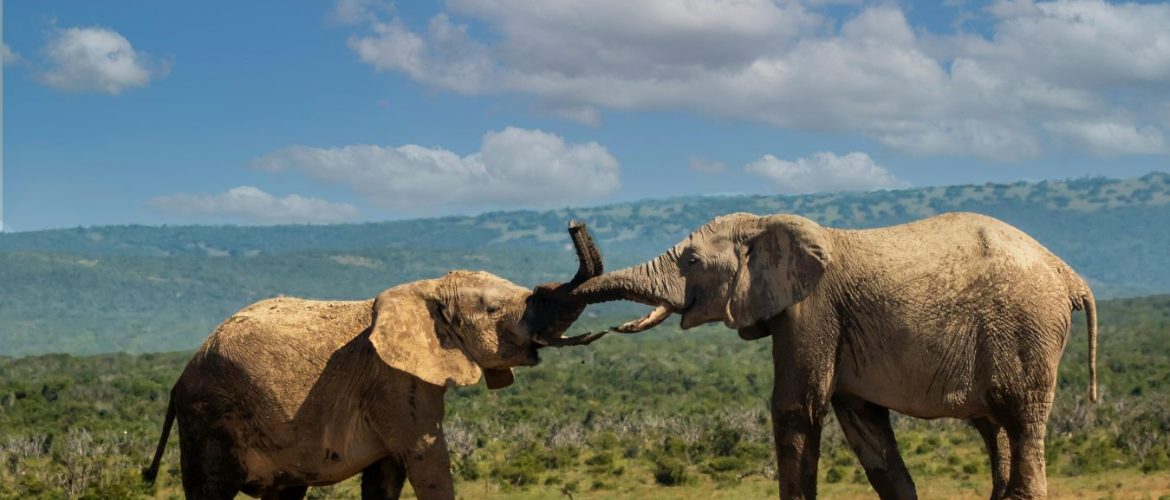
Amboseli is famous for its elephants, and for good reason. The Amboseli Elephant Research Project, started by Cynthia Moss in the 1970s, is the world’s longest-running elephant study. My guide knew many of these elephants by name, and watching him explain their family connections gave the whole experience an almost novelistic depth. These were not anonymous animals. They were characters in an ongoing story.
I spent most of one morning watching a family group at a waterhole. There were perhaps thirty elephants, ranging from enormous matriarchs to calves so young and small and uncertain on their legs that it was physically difficult not to make embarrassing sounds. The calves played in the mud with total abandon – rolling, splashing, falling over, climbing on each other – while the adults drank and rumbled to each other in a language too low for human hearing that I could nonetheless feel in my chest.
The landscape of Amboseli itself deserves more attention than it usually gets. Much of the park is open savanna and dry lakebed – Amboseli means “salty dust” in Maasai, which tells you something about the terrain – but the swamp areas are genuinely lush and green, fed by underground water filtering through from the Kilimanjaro snowmelt.
One afternoon we drove to a viewpoint on the edge of Observation Hill near the centre of the park. The mountain changes colour every fifteen minutes in the late afternoon. At one point it turned briefly pink. Smithsonian Magazine once described the Amboseli-Kilimanjaro vista as one of the defining images of East Africa, and I would not argue with that assessment.
I will tell you honestly: I almost did not include Amboseli in my Kenya itinerary. Someone told me it was “dusty and flat” compared to the Mara. Both of those things are sort of true, and both of them completely miss the point. Amboseli is not trying to be the Mara. It is doing something entirely different. Go in the dry season. Wake up before dawn to catch the mountain without clouds. Spend a morning doing nothing but watching elephants at the water.