
Everyone who has been to Kenya has an opinion about Tsavo, and the opinions are almost never neutral. Either they will tell you it is too big, too dry, too remote – or they will tell you it is the most extraordinary place they have ever put a tyre into and that everywhere else felt slightly anticlimactic by comparison. I am firmly in the second camp.
Tsavo is enormous. Together, Tsavo East and Tsavo West cover over 20,000 square kilometres, making the combined Tsavo ecosystem one of the largest protected areas in the world. When you drive into Tsavo East through the main gate at Voi, you feel it in your body. The landscape opens up in every direction and just keeps going.
My guide, a compact, softly-spoken man named David who had grown up in the area, had deliberately taken us away from the well-travelled circuits. “Most people do the Galana River and Mudanda Rock and leave,” he said. “They miss the rest.” The rest turned out to be vast plains of red-soiled bush dotted with baobabs so old and wide that I kept wanting to stop and stare at them, trying to work out how many centuries of weather they contained.
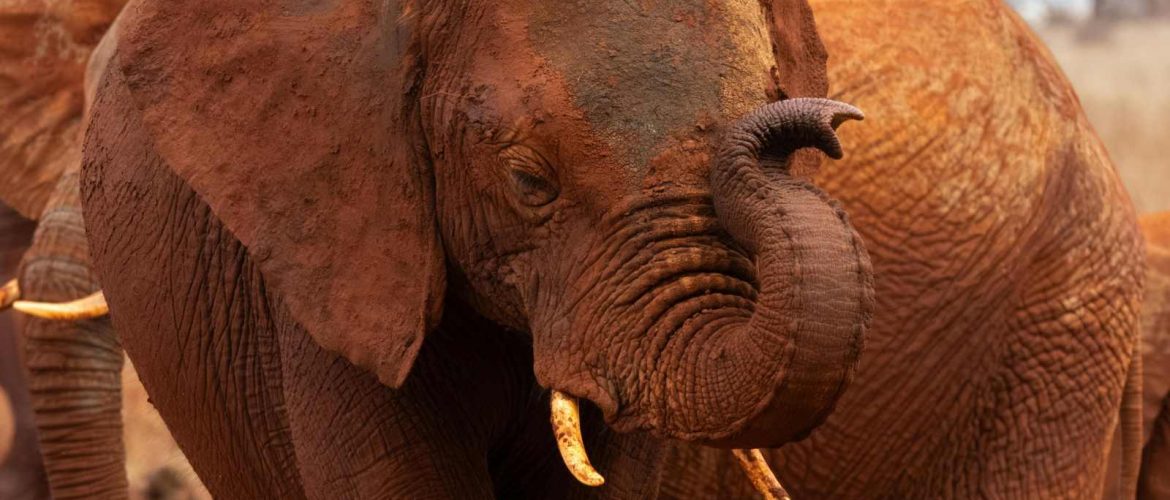
The red elephants are, I will not lie, the main event. Tsavo’s elephants are covered in the park’s distinctive red laterite dust, which they spray over themselves constantly as insect protection and sunscreen. The effect is remarkable – these enormous animals, which should by rights be grey, look as though they have been dipped in terracotta. In the late afternoon light, when the sky itself turns orange-red, the elephants become almost incandescent.
Tsavo West is built around the remarkable Mzima Springs – an oasis where underground springs push millions of litres of crystal-clear water up through volcanic rock each day. I spent an afternoon at the underwater observation tank watching hippos move silently through water so clear it looked like aquarium glass.
The Shetani lava fields in Tsavo West stopped me cold. The word “shetani” means devil in Swahili. A vast, frozen black river of solidified lava, erupted only about 200 years ago, cuts across the landscape like a scar that has not yet healed. Nothing grows on it. Nothing lives there. Standing on its edge in the late afternoon, I had the eerie feeling of looking at something the earth had not finished deciding about yet.
Wildlife in Tsavo is different from the Mara in character as well as species. Tsavo’s lions carry a particular notoriety, thanks partly to the infamous Tsavo man-eaters of the 1890s – two male lions who terrorised construction of the Uganda Railway. The man-eater story follows Tsavo like a reputation it has never quite shaken.
What Tsavo gave me that the Mara did not was solitude. There were moments – especially in the far east of Tsavo East, near the Yatta Plateau – where we drove for four or five hours without seeing another vehicle. Just the two of us and a landscape that looked, and felt, genuinely untouched.
David said something on our last evening that I have thought about a lot since. We were parked on a rise watching the sun drop behind the Chyulu Hills, and he said, “Tsavo does not try to impress you. It just is what it is. Some people cannot accept that.” I think I understood exactly what he meant.